Watercolor vs. Colored Pencil for Nature Journals: Which Medium Fits Your Style?
There is a moment every nature journaler knows. You are sitting on a cold bench at the edge of a marsh, the light is going, and the medium you brought is quietly deciding things for you. Watercolor wants water, a steady hand, and paper that will not buckle. Colored pencil wants patience and a sharpener, but it lets you stop mid-stroke to watch a heron lift off. Neither is better. The real question is which one matches the way you actually draw outdoors — fast or slow, loose or precise, in wind or in a warm café.
Portability: What Actually Fits in a Bag
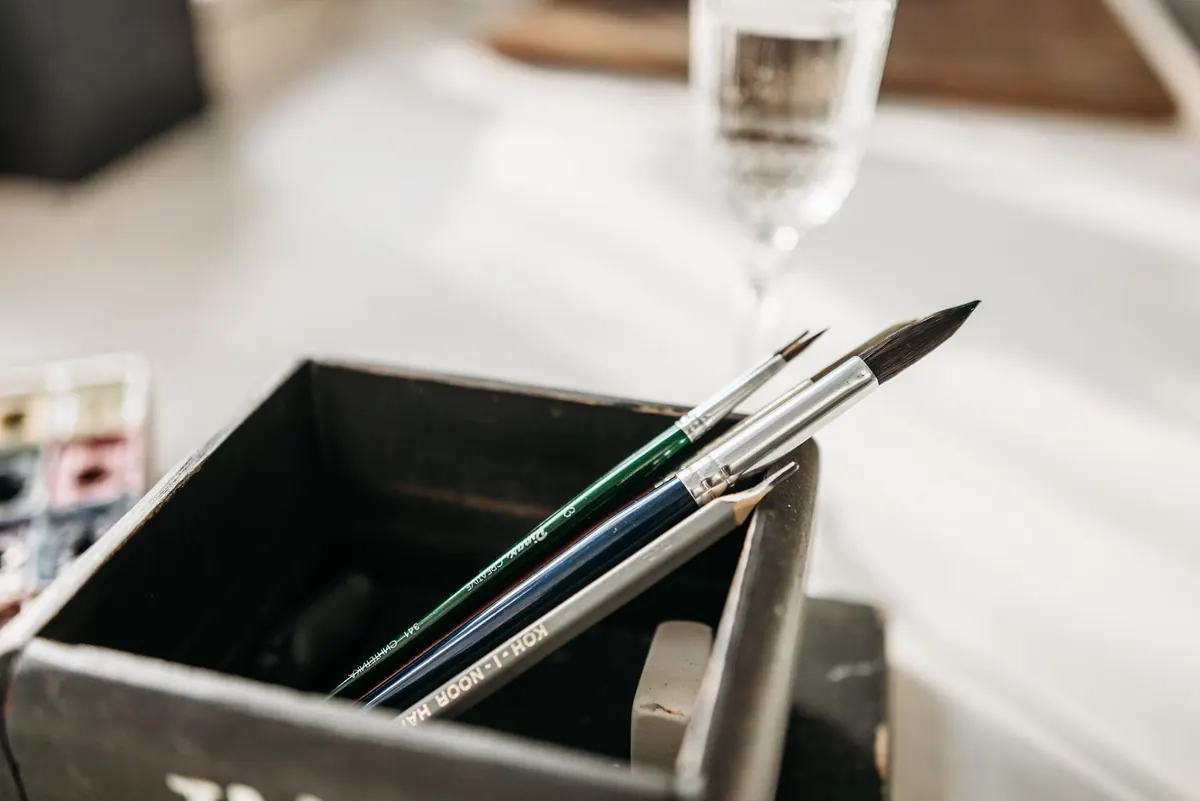
Watercolor sounds fussy until you strip it down. A twelve-color pan set, a water brush, and a small sketchbook will cover most field subjects. No cup, no jar, no loose water to spill down your sleeve. The weight sits in the paper: a flimsy notebook will cockle under even a light wash, so most of us end up carrying a 140 lb (300 gsm) cold-press book, which is heavier than it looks.
Colored pencil is simpler in concept and bulkier in practice. A roll of twelve pencils is compact, but twenty-four fills a pocket, and you will want a sharpener, a sandpaper block to clean the tip, and somewhere to put the shavings. Wax-based pencils are softer and lay down color quickly; oil-based ones hold a sharper point and layer more cleanly. Both are brittle. Drop a pencil roll on rock and you may find two broken cores at the next sketch.
The five-minute kit test
- Watercolor: pan set (12–18 colors), water brush, one travel brush with a real point, small spray bottle, cloth rag, cold-press sketchbook.
- Colored pencil: pencil roll (12–24), hand sharpener, sandpaper block, kneaded eraser, soft brush for crumbs, paper with visible tooth.
- Ask yourself: can I set up and start in under two minutes with cold fingers? Whichever kit fails that test will stay home.
Blending and Color: Two Kinds of Control
Watercolor mixes before and during the stroke. You blend on the palette, or you let two washes bleed into each other on damp paper and accept what happens. That unpredictability is the appeal — skies, wet rock, autumn haze — and the frustration. Once a dark wash is down, you generally cannot lift it back to a light. Mistakes become part of the composition or get covered with a darker shape.
Colored pencil blends by accumulation. You layer red over blue to get a violet that no single pencil contains, then burnish with a light pencil, a colorless blender, or a whisper of solvent. You can erase, lift, and rework. Edges can be razor-sharp, which makes pencil superb for leaf veins, feather barbs, and the fine architecture of a seed head. The trade-off is time: broad areas take many passes, and a full-page sky can eat an afternoon.
Drying Time and Paper: The Hidden Variable
Drying time depends on weather, not on you. In humid air a wash stays damp for a long while; in dry wind it flashes off before you can soften an edge. Close a sketchbook on a damp page and you have a transfer print of your own painting on the facing sheet. Tuck a sheet of wax paper or blotting paper between pages, and pause before you stand up.
Pencil has no drying clock, but paper tooth matters more than most beginners expect. Too smooth and the pigment smears and skips; too rough and fine detail disappears into the valleys. Cold-press watercolor paper takes pencil nicely, which is one reason it is such a good all-purpose choice. If you plan to layer heavily, look for a paper with enough grain to hold several passes without turning glossy.
Field-Friendliness: Wind, Cold, Rain, and Time
Wind is the quiet enemy of watercolor. It tips water containers, dries your washes too fast, and blows grit onto a wet page. Cold slows drying further and makes your water brush stiff. Rain ends the session either way, though pencil pages survive a few drops better than a half-finished wash.
Pencil has its own limits. Wax cores harden in cold weather and resist layering; your hand tires from pressure. But pencil forgives interruption. In a bird hide, where you draw ten strokes and then wait, pencil is the medium that does not punish you for stopping. Watercolor rewards finishing a shape in one confident pass, which suits a journaler who works in longer, calmer sittings.
Which Medium Fits Your Style?
Read these as tendencies, not rules:
- Choose watercolor if you love atmosphere, light on water, distant hills, and quick color notes over an ink drawing.
- Choose colored pencil if you want accurate botanical detail, slow study, and the ability to correct as you go.
- Choose watercolor if you sketch in short bursts and want color on the page within five minutes.
- Choose colored pencil if you work in a windy, cold, or cramped place where water is a liability.
- Choose either if you simply want to draw more often — the medium you will actually carry wins every argument.
A Middle Path: Using Both
Watercolor pencil is the obvious bridge: draw dry, then touch with a damp brush, and you get soft washes without a palette. Water-soluble graphite does the same in monochrome. A very light watercolor underpainting followed, once bone dry, by colored pencil gives you speed for the big shapes and precision for the detail. Work lightly, because pencil over a waxy or heavily sized surface can scratch instead of glide. An ink drawing with a waterproof pen plus loose washes remains the fastest field combination most journalers ever find.
One caution on fixative: sprays contain solvents, so use them outdoors or with good ventilation, follow the label, and never lean over the page while spraying. If a health condition makes this risky, a sheet of glassine between pages does most of the same job.
How to Decide in One Sketch
Pick a single subject — a leaf, a stone, the view from your usual bench — and draw it twice, once in each medium. Note the date, the weather, how many minutes each took, and whether you liked the result. Do this once a week for a month and keep the notes on the last page of your journal. The pattern will surface on its own: you will see which medium you reach for when you are cold, rushed, or absorbed.
Then stop deliberating. Most nature journalers end up with a default for the field and a second medium for the desk, and both get better with use. Carry the light kit, leave the rest at home, and let the page tell you what it needs.
Photo: Pavel Danilyuk / Pexels